FDD & Legal Coordination
We assemble the business information behind all 23 Items, keep your franchise attorney, CPA and state filings moving on one timeline, and make sure every figure matches your franchise model.
23 Items
Disclosures required in every Franchise Disclosure Document
14 days
Minimum time a prospect must have your FDD before signing or paying
120 days
After fiscal year end to complete your annual FDD update
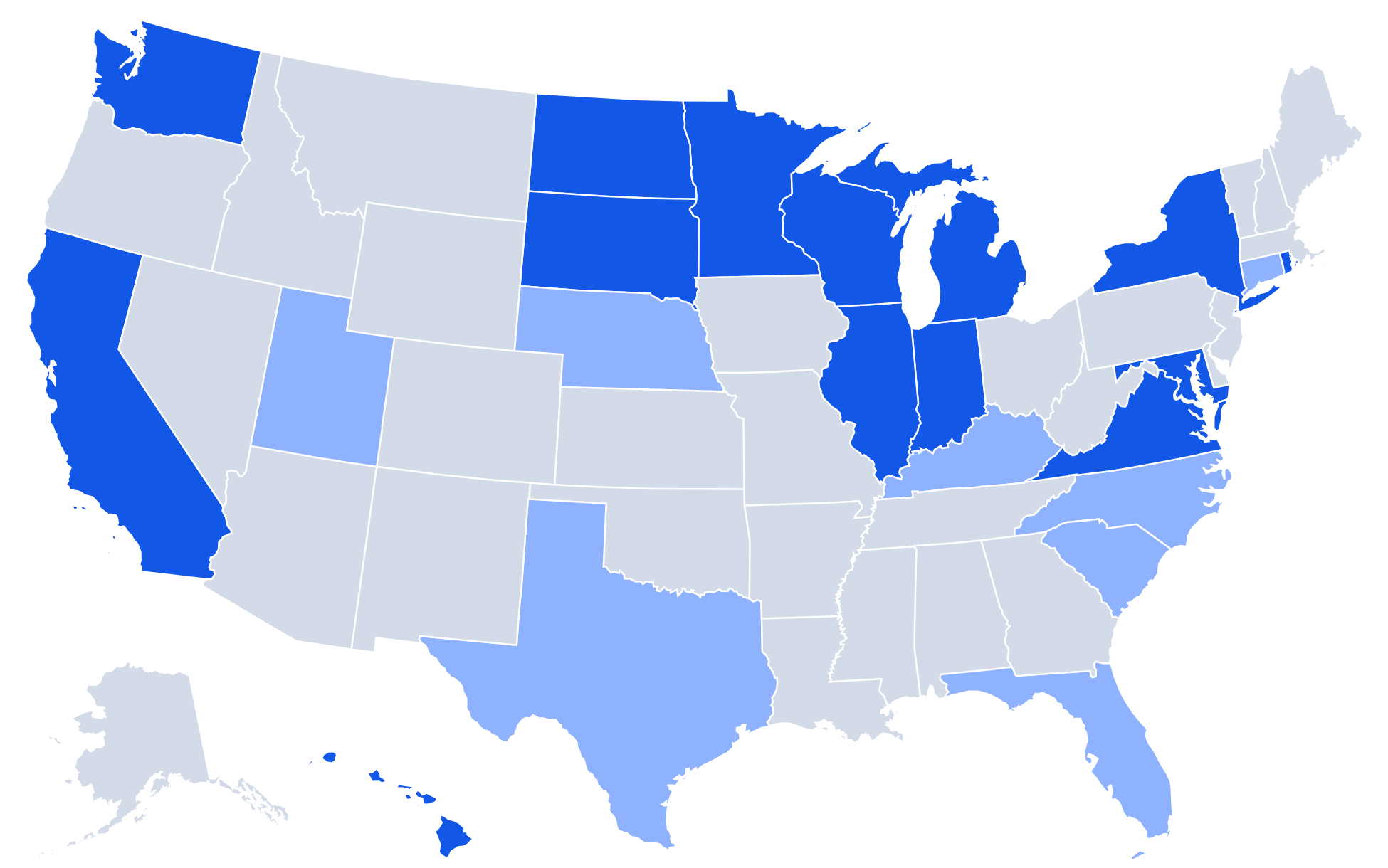
14 states
Require registration or notice filing before you sell
Quick answer
FDD preparation is assembling and drafting the Franchise Disclosure Document, the 23-Item disclosure the FTC Franchise Rule requires franchisors to give prospects at least 14 calendar days before they sign or pay. A franchise attorney drafts the legal text. FDD coordination gathers the fees, investment estimates, territory terms and audited financials behind each Item, and manages state registrations and annual updates.
Reviewed October 20, 2026 by the Fransion franchise development team
Your Franchise Disclosure Document is the most scrutinized document in your franchise system. Prospective franchisees, their attorneys, lenders and state examiners all read it, and every number in it has to agree with your franchise agreement, your financial statements and what your sales team says.
Most delays are not legal problems. They come from missing information: an initial investment range nobody has costed, a territory definition that changes between drafts, or financial statements that are not ready when the filing is. Each gap sends the draft back another round.
Fransion coordinates the business side of the FDD. We build the inputs from your franchise model, track every open item, keep your attorney and CPA on one timeline, and plan state registrations around the markets you want to sell in first. Your attorney remains responsible for the legal document.
Our process
Most first FDDs take six to twelve weeks once the business information is ready. Registration states add their own review time.
01
1 to 2 weeks
We map what your attorney needs for each Item, what already exists and what has to be created, and agree a drafting timeline.
Deliverable: FDD information checklist and timeline
02
2 to 3 weeks
We turn your franchise model into the figures behind Items 5, 6, 7 and 12, with the assumptions documented so they can be defended.
Deliverable: Verified inputs for Items 5, 6, 7 and 12
03
In parallel
Your CPA prepares the franchisor entity’s financial statements for Item 21. We schedule the audit early so it never holds up a filing.
Deliverable: Audit plan agreed with your CPA
04
4 to 8 weeks
Your franchise attorney drafts the FDD and franchise agreement. We review each draft against your model and close open items quickly.
Deliverable: Final FDD and franchise agreement
05
Varies by state
Filings go to registration states in the order of your growth map, with exemption notices where they apply and fast responses to examiner comments.
Deliverable: Registration plan and filing tracker
06
Every year
The FDD is updated within 120 days after your fiscal year ends, and material changes are added during the year. We keep the calendar.
Deliverable: Update calendar and renewal checklist
Why Fransion
Your attorney writes the legal document. We make sure the business behind it is ready, consistent and delivered on time.
01
We track every open item across your franchise attorney, your CPA and your team, so drafts move in weeks, not months.
02
Fees, investment ranges and territory terms come from your franchise model, with the assumptions written down.
03
We file first where you plan to sell first.
04
Your website and recruitment campaigns are reviewed against the FDD before they launch, so sales claims stay compliant.
Have a question about your plan? We reply within one business day. Talk to a franchise specialist →
Scope
Everything around the legal drafting that a franchisor usually has to manage alone.
Company history, management bios, litigation and bankruptcy disclosures gathered and organized by Item.
Initial fees, ongoing fees and the estimated initial investment range for Items 5, 6 and 7.
Territory type, size and protections described consistently for Item 12 and the franchise agreement.
Whether to include a financial performance representation, and the data you would need to support one.
Audit timing and scope agreed with your CPA for Item 21.
Filing order, fees, examiner comments and effective dates tracked for every state.
Renewals, amendments and quarterly material-change reviews scheduled a year ahead.
Website, brochures and recruitment ads checked against your FDD before they are used.
Reference
Every FDD follows the same 23-Item structure set by the FTC Franchise Rule. This summary shows what each Item covers and where franchisors most often need business input.
| Item | Topic | What it covers |
|---|---|---|
| Item 1 | The franchisor and its parents, predecessors and affiliates | Who is offering the franchise, its business background and the market it competes in. |
| Item 2 | Business experience | Employment history for the past five years of directors, officers and key managers. |
| Item 3 | Litigation | Relevant lawsuits and judgments involving the franchisor and key people. |
| Item 4 | Bankruptcy | Bankruptcy history of the franchisor and key people within the past ten years. |
| Item 5 | Initial fees | Fees paid before the business opens, such as the initial franchise fee. |
| Item 6 | Other fees | Recurring and occasional fees, such as royalties, brand fund and technology fees. |
| Item 7 | Estimated initial investment | The total cost to open, shown as a range by category, including working capital. |
| Item 8 | Restrictions on sources of products and services | Required or approved suppliers, and any revenue the franchisor receives from them. |
| Item 9 | Franchisee’s obligations | A cross-reference table of the franchisee’s main obligations. |
| Item 10 | Financing | Any financing offered by the franchisor or its affiliates. |
| Item 11 | Franchisor’s assistance, advertising, computer systems and training | Pre-opening and ongoing support, advertising funds, technology, the operations manual and the training program. |
| Item 12 | Territory | Whether a territory is granted, how it is defined and what protection it has. |
| Item 13 | Trademarks | The marks licensed to the franchisee and their registration status. |
| Item 14 | Patents, copyrights and proprietary information | Other intellectual property the franchisee uses. |
| Item 15 | Obligation to participate in the operation of the business | Whether the owner must work in the business personally. |
| Item 16 | Restrictions on what the franchisee may sell | Limits on the products and services a franchisee may offer. |
| Item 17 | Renewal, termination, transfer and dispute resolution | Key terms of the franchise relationship, summarized in a table. |
| Item 18 | Public figures | Any celebrity involvement in the franchise. |
| Item 19 | Financial performance representations | Any sales, income or profit information, with its basis. Optional, but the only place such claims may be made. |
| Item 20 | Outlets and franchisee information | Unit counts, openings, transfers and closures, plus franchisee contact lists. |
| Item 21 | Financial statements | The franchisor’s audited financial statements, with phase-in rules for new franchisors. |
| Item 22 | Contracts | Copies of the franchise agreement and other agreements the franchisee signs. |
| Item 23 | Receipts | Pages the prospect signs to confirm when they received the FDD. |
Summary based on the FTC Franchise Rule, 16 CFR Part 436. Your franchise attorney determines the exact content of your FDD.
Roles
A compliant FDD needs legal, accounting and business work. Here is how it divides.
Recommended
Fransion does not provide legal or accounting advice. Your FDD is prepared by a qualified franchise attorney and your financial statements by an independent CPA.
Avoid these
Most FDD problems are avoidable with better inputs and a clear calendar.
1
Underestimating the initial investment leaves franchisees short of working capital and invites disputes later.
2
Sales or profit figures shared on calls, websites or ads that are not in Item 19 create legal exposure.
3
When Items 5 and 6 differ from the franchise agreement, examiners send comments and candidates lose trust.
4
If a registration is not renewed on time, you cannot offer franchises in that state until it is.
5
Offering a franchise in a registration state before registration is effective, or without the 14-day waiting period, can make the sale voidable.
Investment
The total depends on how complex your model is, whether you include Item 19 and how many states you register in. These are the parts every franchisor budgets for.
After a free consultation we give you a fixed price for our coordination, plus a realistic budget for legal, audit and filing costs.
What drives it: Model complexity, number of agreements, Item 19 and state addenda
What drives it: Whether the franchisor entity is new and how clean its books are
What drives it: Number of registration and exemption states
What drives it: Number of states and how often your offering changes
What drives it: How much of your model and data already exists
Franchise law
The FTC Franchise Rule applies in every state. You must give prospects your current FDD at least 14 calendar days before they sign a binding agreement or pay any money, and if you unilaterally make material changes to the franchise agreement, they must receive the final form at least 7 calendar days before signing.
The FDD is updated within 120 days after the end of your fiscal year, and material changes during the year are added each quarter. Fourteen states also require registration or notice filing before you offer franchises there.
Select a state below for its fdd & legal coordination guide. General information, not legal advice.
FAQs
Still have a question? Ask a franchise development specialist, free and confidential.
They run from Item 1 (the franchisor) through fees (Items 5 and 6), the initial investment (Item 7), territory (Item 12), financial performance representations (Item 19), outlet data (Item 20), financial statements (Item 21), contracts (Item 22) and receipts (Item 23). The full list is in the table above.
Most first FDDs take six to twelve weeks once the business information is ready. Audited financial statements and registration state reviews can add time, so both are scheduled at the start.
Costs come from legal drafting, the financial statement audit, state filing fees and annual renewals. We provide a fixed price for our coordination and a realistic budget for the rest after a free consultation.
At least once a year, within 120 days after your fiscal year ends, and during the year when material changes occur. Registration states also require annual renewals.
Item 21 requires audited statements, but the FTC Rule allows new franchisors to phase them in. Many registration states still expect audited statements before they register you, so plan the audit early with your CPA.
Item 19 is where a franchisor may share financial performance representations, such as average sales or profits, with a reasonable basis. It is optional, but if you do not include it, you cannot make earnings claims to prospects.
Not in a registration state. You must wait until registration is effective there. In other states you can offer franchises once your FDD is complete and any required exemption filing is made.
No. Your FDD and franchise agreement are drafted by a qualified franchise attorney. Fransion prepares the business inputs, coordinates the timeline and keeps your marketing consistent with the document.
Sources
Content reviewed October 20, 2026. General information, not legal or financial advice.
Free consultation
No cost and no obligation. A franchise specialist reviews your details and gets back to you.
01
Share a few details
Tell us about your business and what you want to achieve.
02
Speak with a specialist
A call with a franchise specialist about your goals.
03
Get a clear recommendation
An honest view of where you stand and the right next steps.
Prefer email? hello@fransion.com
By state
Franchise law, registration status and leading markets for all 50 states and Washington, D.C.
Related services
Strategy and structure to turn your business into a franchise system.
Learn more →
Financial models and growth plans for franchisor and franchisee.
Learn more →
Data-driven territories sized for franchisee success.
Learn more →
A structured, compliant sales process from first call to signed agreement.
Learn more →
Documenting your system so any qualified owner can run it.
Learn more →
Franchisee recruitment marketing that fills your pipeline with qualified candidates.
Learn more →
Not ready to talk yet?
Six questions, two minutes, and your answers never leave your browser. Or read our step-by-step guide to franchising your business.
