Portland · Oregon
A metro area of 2.5 million residents, the 26th-largest in the US. Here is what franchise brands should know about the market, how to draw territories and how to market each unit.
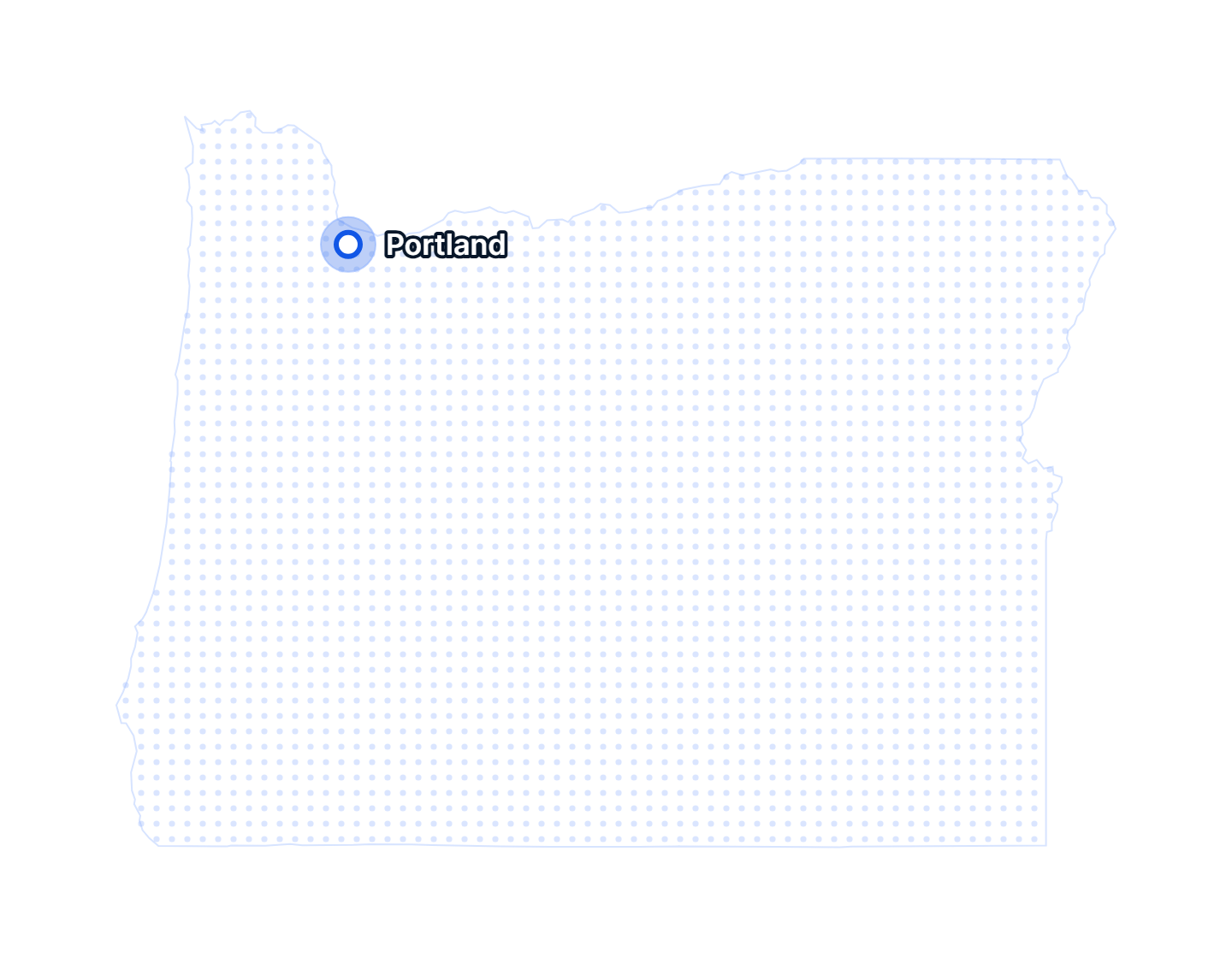
2.5 million
Metro residents (Census Bureau, 2024 estimate)
26th
Largest metro area in the United States
7 counties
In the Portland–Vancouver–Hillsboro metro area
No state filing
Oregon does not register franchises
Quick answer
The metro has 2.5 million residents across 7 counties, the 26th-largest metro area in the United States. Plan territories on households and travel time, give every unit its own page and Google Business Profile, and deliver your FDD at least 14 calendar days before anyone signs or pays.
Reviewed by the Fransion franchise research team · October 2026 · Sources listed below
The market
Semiconductors, athletic apparel, design and a metro that extends into Washington state.
For a franchise brand, that means planning Portland as several local markets, each with its own customers, search results and real estate costs.
Metro
Portland–Vancouver–Hillsboro, 7 counties
Population
2,537,904 (July 2024 estimate)
National rank
26th-largest metro area
State law
Nearby markets
Beaverton, Hillsboro, Gresham, Lake Oswego, Vancouver, WA
Territories
Territories that cross into Vancouver, WA fall under Washington’s registration requirements.
Radius territory
Simple to write into the franchise agreement, and a good fit where customers come from a short distance, such as dense, walkable neighborhoods. In spread-out areas the same distance can hold very different numbers of customers.
Drive-time territory
Follows the roads and traffic patterns customers actually use, and can be sized on household counts so every owner starts with comparable demand. A good fit where most customers drive.

For franchise brands
A customer in Beaverton and a customer in Hillsboro see different search results. Each Portland unit needs its own page on your franchise website, its own Google Business Profile and its own reviews.
Franchise website design →
A location page for each Portland unit, with its own hours, services, reviews and map, on one brand site.
Franchise SEO →
Google Business Profiles and service areas drawn around real Portland territories, so units do not compete with each other.
Paid media and PPC →
Search and local campaigns budgeted per territory and measured per location.
Franchise lead generation →
Recruiting owners for open Portland territories, within the FTC Franchise Rule.
FAQs
Still have a question? Ask a specialist, free and confidential.
Portland sits in the Portland–Vancouver–Hillsboro metro area, with 2,537,904 residents across 7 counties in the Census Bureau’s July 2024 estimate, the 26th-largest metro area in the United States. For most concepts that is room for several territories, not one.
Territories that cross into Vancouver, WA fall under Washington’s registration requirements. Territory mapping sizes each territory on households and travel time for your customer.
No. Oregon does not require franchise registration or a state franchise filing. The FTC Franchise Rule still applies: deliver a compliant FDD at least 14 calendar days before a candidate signs or pays.
Communities such as Beaverton, Hillsboro, Gresham, Lake Oswego and Vancouver, WA each behave like their own market, with their own search results and customer base. Plan them as separate territories rather than one Portland market.
Fransion works remotely with franchise brands nationwide, serving Portland and the rest of Oregon. Strategy, design and marketing are done by our own team, and we travel for workshops and launches when it helps.
Free consultation
No cost and no obligation. A franchise specialist reviews your details and gets back to you.
01
Share a few details
Tell us about your business and what you want to achieve.
02
Speak with a specialist
A call with a franchise specialist about your goals.
03
Get a clear recommendation
An honest view of where you stand and the right next steps.
Prefer email? hello@fransion.com
